
Blog
Celebrating the role of women in creating a climate resilient Scotland – but there is no time for complacency
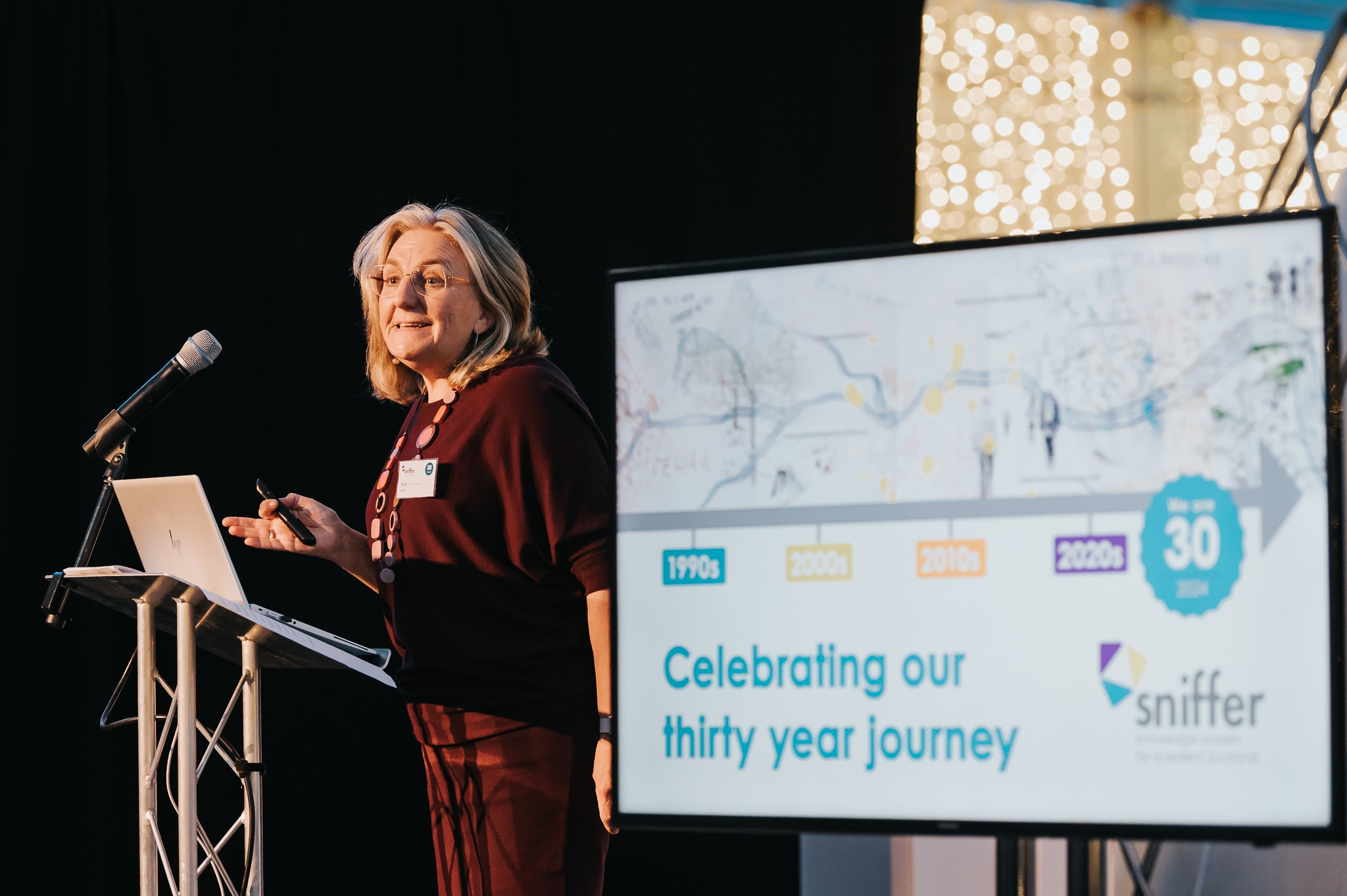
Reflections from Ruth Wolstenholme, current project lead and former Managing Director of Verture.
A colleague recently observed that women appear to be well represented in the charity sector that we are part of. If that’s true, it’s worth reflecting on as we mark International Women’s Day.
Figures often quoted suggest that up to 70% of the charity workforce in Scotland are women. Interestingly, this broadly matches the proportion of women employed by Verture over the last three decades.
There are many reasons why women may be drawn to the charity sector. Some relate to the flexibility it can offer; others to the strong sense of purpose that motivates people to help others.
This aligns with Verture’s understanding of what is needed to build a more climate‑resilient Scotland. We see the need for long term relationship building, mindful approaches and not only turning to technological fixes.
But while it is important to recognise the contribution women make across the sector, there is no room for complacency.
Scottish figures from three years ago suggested that fewer than half of senior charity roles were held by women, and only around 40% of trustees were women. There is clearly still progress to be made in achieving gender balance in leadership.
And there is a deeper question still.
This year’s International Women’s Day theme calls for “rights, justice and action for ALL women and girls.” ‘All’ is a small word with mighty implications.
How many women in positions of leadership come from relatively comfortable backgrounds? It is often easier to participate in decision‑making spaces when we have been privileged with access to time, resources and networks.
Conversely, how many women in leadership roles represent those most affected by climate impacts, people from historically marginalised communities, including ethnic minority communities, lower‑income households, disabled people, and both younger and older generations?
Evidence increasingly shows that climate impacts are closely linked with wider social inequalities. Reports such as Everyone’s Environment highlight how environmental challenges and social disadvantage are deeply interconnected.
We need to look within.
We need to find new ways to open leadership spaces so they are genuinely inclusive. That means going beyond collaboration and compassion. It also requires courage.
How can we become the disruptors that are needed? How can we ensure that our recruitment processes, including for charity boards, and our decision‑making models create space for the voices of future generations and those who have historically been marginalised from positions of power?
What role can each of us play in making that transition happen?
