
Blog
Floods, fires and the future we’re not ready for
The UK has just experienced one of its warmest Mays on record. Across the country, communities are dealing with flooding, wildfires, extreme heat and other increasingly familiar climate impacts. But while climate change is often discussed through statistics and headlines, its effects are experienced by real people, in very different ways.
That was the focus of Verture’s recent event, Floods, Fires and the Future We’re Not Ready For, which brought together former BBC Science Editor, journalist and author David Shukman, social and environmental advisor Liz Gadd and our CEO Jo Kerr.
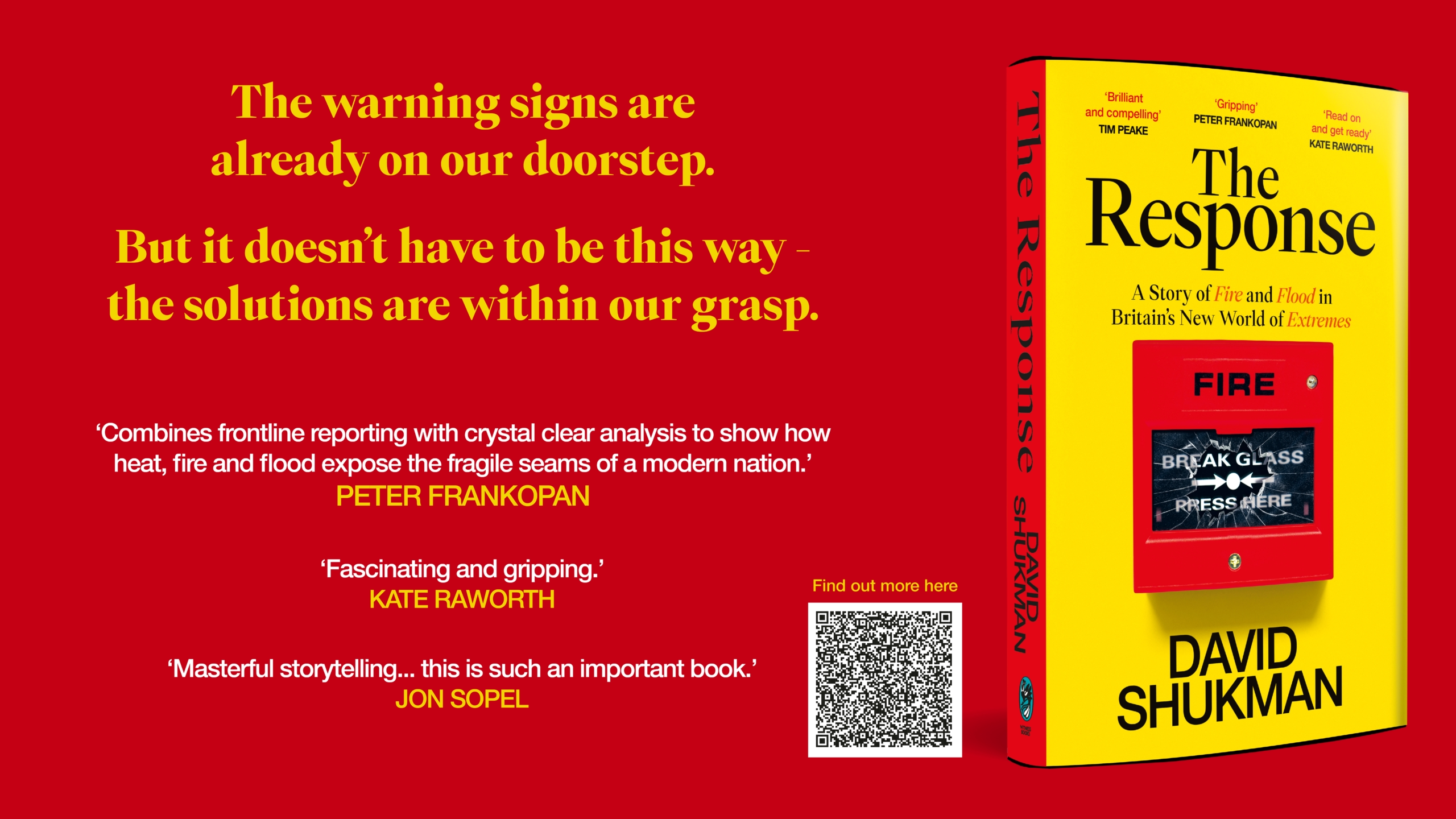
Centred around David’s new book, The Response, the conversation explored stories from the front line of climate change, from people experiencing devastating floods and extreme heat to communities grappling with the realities of a changing climate.
Alongside Liz’s work on the links between environmental change, poverty and hardship across the UK, the discussion highlighted who is most affected when crises hit, what makes some communities more vulnerable and why resilience and fairness must go hand in hand. As the session unfolded, one thing became clear: climate change is not a future challenge. It is already shaping people’s lives.
Climate change is real and local
Early in the discussion, David reflected on a recent appearance at the Hay Festival in Wales. Temperatures reached around 31 degrees. Inside a packed marquee, the audience sat fanning themselves in the heat.
Before he stepped on stage, organisers asked David to do something new: give a health warning. If people felt unwell, they should raise their hand. If someone nearby was struggling, they should keep an eye on them. Someone suffering from heat exhaustion might not be able to ask for help themselves.
For David, it was a powerful reminder of one of the central themes of The Response. Climate change is no longer something happening elsewhere, not a story about distant disasters or future generations. It is here. It is local. And it is already affecting daily life.
Not long ago, a public event in Britain requiring a heat warning would have seemed extraordinary. Today, it feels increasingly normal. That shift should concern us.
The stories behind the headlines
Throughout the event, David shared stories that revealed the human reality behind climate impacts. Floods, heatwaves and disasters can often feel distant when presented as statistics. But the experiences behind those headlines are anything but.
He spoke about an elderly man trapped in a flooded basement flat. As water rose to his chest and then his neck, he became convinced he would drown. Believing he was living through his final moments, he phoned his sister to tell her he loved her. He survived – rescued by a couple living upstairs.
David also reflected on the dangers of extreme heat, including stories of people who lost their lives during heatwaves – many of whom never considered themselves vulnerable. A common thread runs through these accounts: climate impacts rarely arrive labelled as “climate change”. They appear instead as housing problems, health emergencies or infrastructure failures.
Climate change is simply the backdrop and the consequences are deeply personal.
Who gets hit first?
If David’s stories showed the reality of climate impacts, Liz Gadd’s contribution helped explain why those impacts are not felt equally. Drawing on her work on environmental change, hunger and hardship across the UK, Liz highlighted a consistent pattern: those already facing disadvantage are often the hardest hit.
One example that stayed with many attendees involved a family whose children slept on a mattress on the floor because they could not afford bed frames. When flooding damaged their home, they lost the mattress too -leaving them sleeping on piles of clothes. The immediate issue was flooding, but the wider story was one of poverty, insecurity and limited ability to recover.
As Liz emphasised, climate change does not create inequality. It exposes and amplifies it. The question is not only how we respond to climate impacts, but who has the resources to prepare for them.
Resilience cannot rest on individuals alone
A key theme from the discussion was that resilience cannot simply be left to individuals. Government advice often encourages households to keep emergency supplies.
But what does that mean for families already relying on food banks? How realistic is it for people struggling with the cost of living?
For many, preparedness is shaped by income, housing and access to support, not just planning. This is why trusted local organisations, charities and community groups are so important. They understand the communities they serve and are often the first to provide support before, during and after crises.
Resilience is about more than infrastructure. It is about relationships, trust and ensuring people have what they need to cope with change.
Why this matters for Just Resilience
These themes sit at the heart of Verture’s new strategy, Just Resilience. Climate impacts do not affect everyone equally – nor does the ability to prepare, adapt or recover. Those in poor housing, experiencing poverty, managing health conditions or lacking support are often most exposed.
A fair response must recognise that reality. It must go beyond reacting to emergencies and focus on creating the conditions that help people and communities thrive despite growing climate pressures. For Verture, resilience and fairness are inseparable.
Reasons for hope
While many of the stories shared were difficult, the conversation was not without hope.
David highlighted examples of communities coming together during floods, fires and other emergencies – neighbours helping neighbours, local groups stepping in where support was needed most. These stories often receive less attention than the disasters themselves, yet they are essential. They show that resilience already exists within communities.
The challenge is to recognise, support and strengthen it. As climate impacts become more frequent and severe, there is an urgent need to move beyond reacting to crises and towards building long-term resilience. The future is already arriving. The question is whether we choose to prepare for it in a way that is fair, practical and leaves nobody behind.
Find out more
Learn more about Verture’s new strategy, Just Resilience, and our vision for a resilient and fair future for all.
You can also find out more about David Shukman’s new book, The Response, and Liz Gadd’s work exploring the links between environmental change, hunger and hardship across the UK.
If you’re interested in working towards a fairer and more resilient future, contact us at info@verture.org.uk, sign up to our newsletter, or follow Verture on LinkedIn.
Click the link below to watch the full event.
