
Blog
Reflections on COP30: What We Learned in Belém

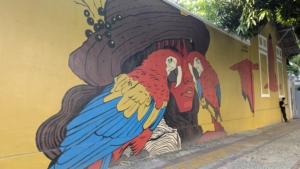
A few weeks on from COP30, I’ve finally had the chance to step back and reflect on my time in Belém, a city full of colour, warmth and determination, and the backdrop to one of the most complex, challenging and inspiring global climate gatherings yet.
Being there was an extraordinary experience. The welcome from local people was immediate and genuine, a reminder that climate action is, at its heart, about people and relationships. That spirit stayed with me throughout the week, even amid the scale and intensity of the negotiations.
COP30, like every COP, was a mix of contradictions: baffling at times, inspiring at others, occasionally frustrating, and always exhausting. The event campus was vast, with even short journeys between sessions taking twenty minutes. And while the infrastructure gradually improved over the week, the sense of confusion among delegates often reflected the bigger truth we are navigating one of the most difficult and high-stakes transitions in human history.
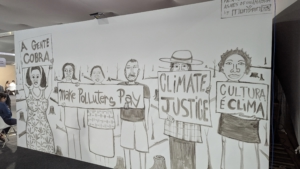
At the time I shared some initial reflections on LinkedIn. With a bit of distance now, here are three deeper takeaways that feel particularly important for Verture’s mission and the work ahead.
- A widening gap between negotiators and practitioners
One of the clearest divides at COP30 was between the negotiators working behind closed doors, and the activists, NGOs and community leaders working openly and tirelessly in the Blue Zone.
The disconnect was stark.
Negotiators were largely shielded from the lived realities of climate impacts, while those with lived experience often struggled to influence the formal process. This tension can feel discouraging, but it also reinforces why organisations like Verture matter.
Our work is about bridging that gap: ensuring that policy is informed by practice, that community voices shape decisions, and that resilience is built with people, not imposed on them.
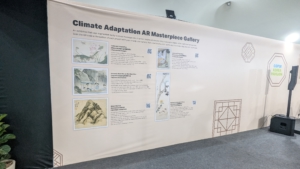
- Global conversations can overshadow local priorities
COP debates are dominated by enormous global issues finance negotiations, emissions trajectories, geopolitical tensions. But that scale can sometimes obscure the urgent, practical work being driven by communities on the frontline of climate impacts.
Many delegates voiced frustration that local priorities were getting lost in the noise.
This is a reminder of why locally led adaptation is essential and why Verture’s role in supporting communities, convening partnerships, and elevating lived expertise is more critical than ever. Resilience happens in neighbourhoods, not negotiation rooms.
- The divide on the role of business
One theme that stood out more than ever this year was the sharp split between those who believe “business is the answer,” and those who see “business as the problem.”
For some, the power of market forces- driving down the cost of renewables and investing in new tech is the is the only way forward.
For others, meaningful change requires a fundamental economic shift.
Very few delegates occupied the middle ground.
This presents a challenge but also a major opportunity. The climate crisis will not be solved by any single sector. Collaboration between communities, policymakers, businesses and civil society is essential. Verture’s commitment to partnership models, cross-sector convening and shared decision-making feels even more relevant in light of this global tension.
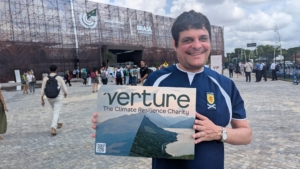
What COP30 means for Verture’s work
Looking back, my time in Belém reinforced three things:
- The urgency of locally led resilience
- The value of bridging practice and policy
- The importance of trusted partnerships across sectors
These aren’t just reflections they’re guiding principles for Verture’s strategy as we help Scotland navigate an increasingly uncertain climate future.
There is so much more to unpack from COP30, and the true story of this summit will continue to unfold over months and years. But the conversations, connections and contrasts I experienced in Belém have strengthened my sense of purpose and deepened my belief in the work ahead.
For more updates and insights follow : Creative Climate Futures on Substack | Substack
