
Blog
Scottish Budget 2026: Climate Resilience and a Just Transition
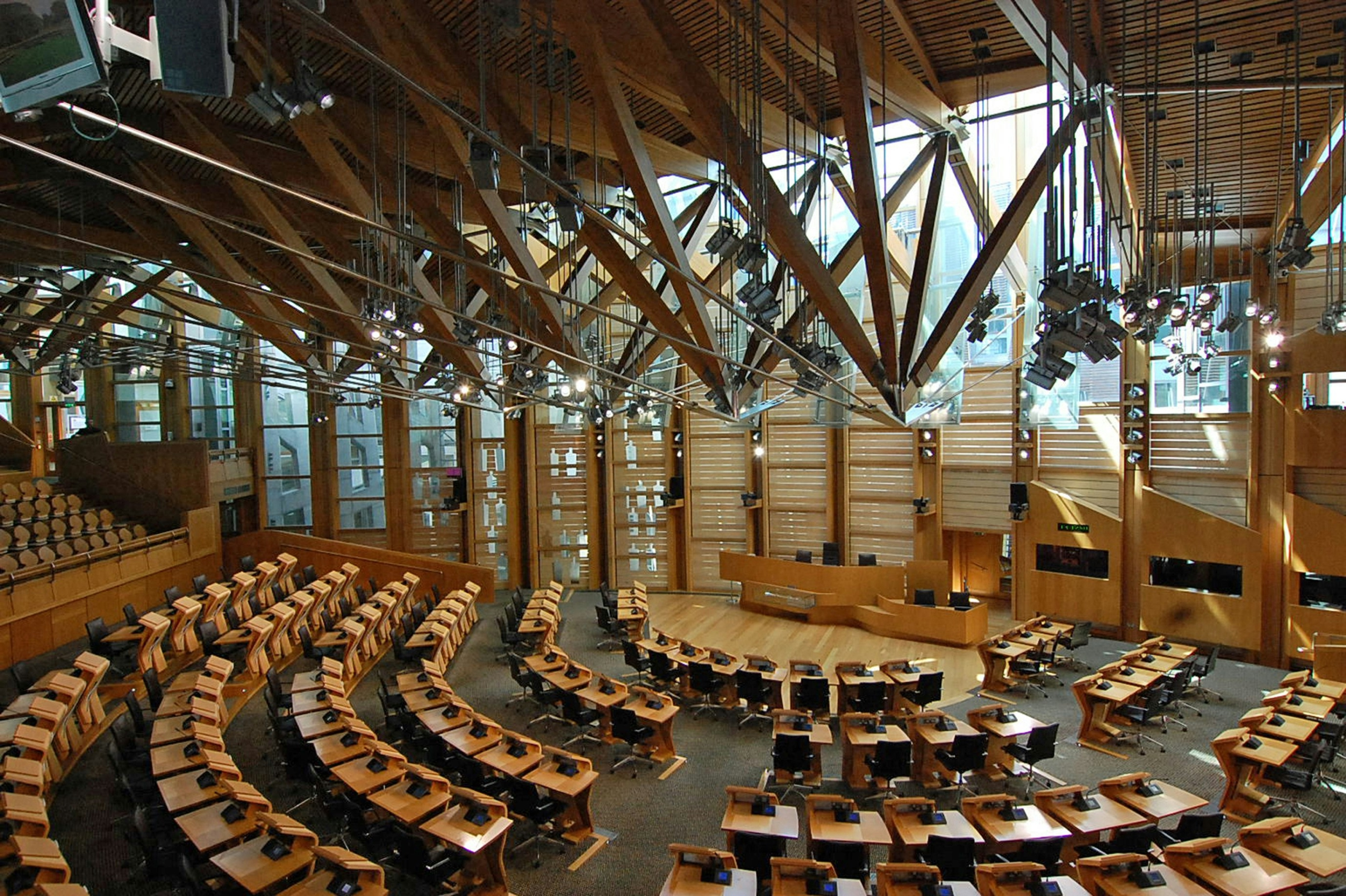
This week’s Scottish Budget comes at a time when climate impacts are increasingly visible across Scotland. Flooding, extreme weather, rising food costs and pressure on public services are already being felt by communities. Against that backdrop, it is welcome to see climate resilience more clearly positioned within fiscal decision-making, signalling a shift in how adaptation is understood.
Among the measures announced, the introduction of a private jet tax stands out as an indication that fairness and climate responsibility are beginning to influence policy choices. More broadly, the Budget has been framed around reducing emissions, increasing resilience to climate change and supporting households through the cost-of-living crisis – priorities that are deeply interconnected.
Reflecting on the Budget, Jo Kerr, CEO of Verture, said:
“At Verture, we welcome the inclusion of climate resilience in the budget. The Scottish Government is demonstrating that climate resilience isn’t an add-on. When we invest in adaptation and resilience, we’re also investing in people’s wellbeing, economic stability and the systems communities rely on every day.”
Climate resilience as investment
One of the most encouraging aspects of the Budget is the recognition that climate resilience is not separate from economic and social wellbeing. Commitments relating to land use, food and farming, rural communities and the natural environment highlight the role these systems play in supporting livelihoods, public services and local economies.
This framing challenges the idea that adaptation is a cost to be managed, rather than an investment that can strengthen communities and reduce future risk. As Jo Kerr highlighted:
“As we see every day in our work, climate action strengthens communities rather than leaving people behind. A just approach to resilience means recognising inequality, reducing vulnerability and ensuring the benefits of adaptation are shared fairly.”
This focus on just resilience is particularly important as climate impacts are not felt evenly. Without deliberate attention to fairness, adaptation risks shifting responsibility and risk onto those least able to absorb it.
Linking adaptation and net zero
Looking to the future, we need to see adaptation investment to match these ambitions. Embedding resilience consistently across public spending and ensuring transparency about who benefits and who carries risk will be essential in the years ahead.
Jo Kerr also emphasised the importance of linking adaptation with Scotland’s wider climate commitments:
“Net zero commitments also require adaptation to be in place. Reducing emissions is essential, but it is not enough on its own. We must also invest in protecting people and places from the impacts that are already happening.”
What happens next
The Scottish Budget 2026 suggests growing recognition that climate resilience, economic wellbeing and social justice cannot be separated. Turning that recognition into lasting change will depend on sustained action, coordination across policy areas and investment that reaches communities on the ground.
At Verture, we will continue to work with partners across sectors to support resilience that is fair, practical and grounded in lived experience. Budgets set direction – delivery determines outcomes.
