
Blog
Stories From the Future – Looking Back on Creative Climate Futures
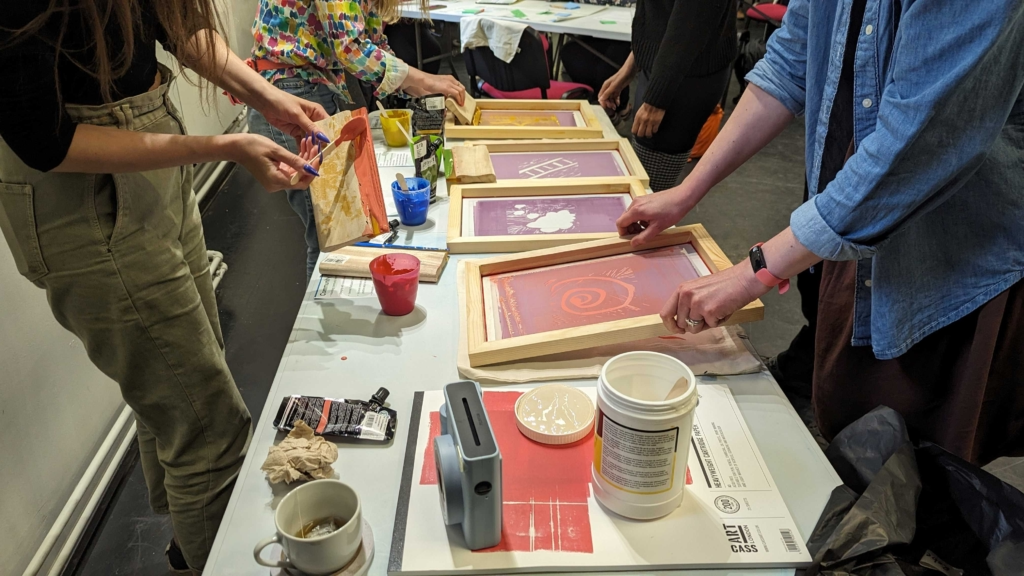
Reflections from Andrew Williams, Local Programme Manager at Verture.
When we first set out on the Creative Climate Futures journey, I don’t think any of us anticipated how transformative it would become, not just for the communities we worked alongside, but for all of us involved in delivering it.
Looking back, what stands out most is that this wasn’t a “climate project” in any conventional sense. It wasn’t about delivering pre-designed interventions or asking communities to slot into existing plans. Instead, it challenged us to rethink how climate action happens at a neighbourhood level and, more importantly, who gets to shape it.
Creative Climate Futures was built on a simple but powerful premise: if we want meaningful, lasting climate action, we have to start with communities.
In the Gorbals and Easterhouse, the two pioneer neighbourhoods of the project, we worked with residents, artists, technical specialists and decision-makers to explore what climate change actually means in people’s day-to-day lives.
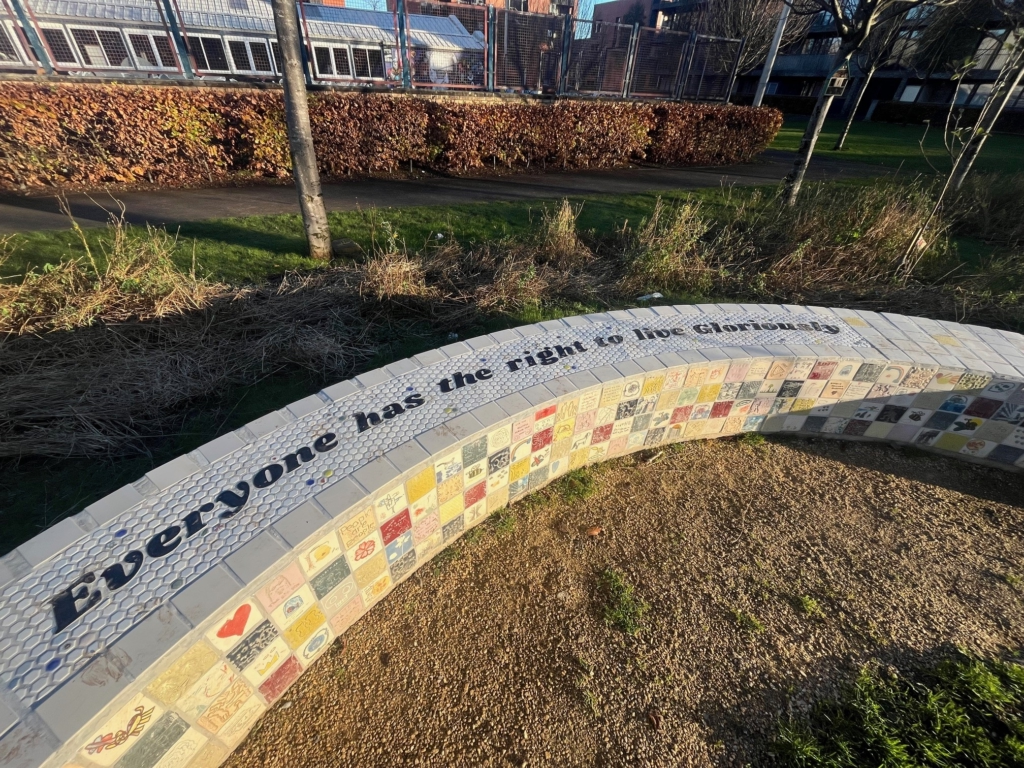
From the outset, this meant letting go of some traditional approaches. Rather than coming in with answers, we focused on listening to what mattered locally. That shift, from delivering to communities to working with them, was one of the most important lessons of the entire programme.
But that shift wasn’t easy. It required time, trust, and a willingness to sit with uncertainty. But it also opened up conversations and ideas that simply wouldn’t have emerged otherwise.
One of the defining elements of Creative Climate Futures was the role of embedded artists. Their contribution went far beyond engagement. They helped unlock new ways of thinking about climate change.
Through creative processes, people were given the space to imagine futures that felt tangible and personal. Climate change shifted from being an abstract, global issue to something rooted in local experience, aspiration and identity. We saw that when people can see themselves in the future, they’re far more likely to feel ownership over shaping it.
This came to life in very practical ways, from new walking routes in the Gorbals to the development of plans for an urban park in Easterhouse. These weren’t just infrastructure changes. They were reflections of community priorities, shaped through dialogue, creativity and collaboration.
Climate change can often feel overwhelming. One of the quiet successes of Creative Climate Futures was how it helped shift that narrative.
By connecting the big picture to everyday life – how our neighbourhoods look, feel and function – we were able to turn concern into something more constructive. People began to see that while the challenges are real, there is also agency. There are things we can do, together, to shape a more resilient future. This wasn’t about ignoring the scale of the crisis, but about grounding it in hope and possibility.
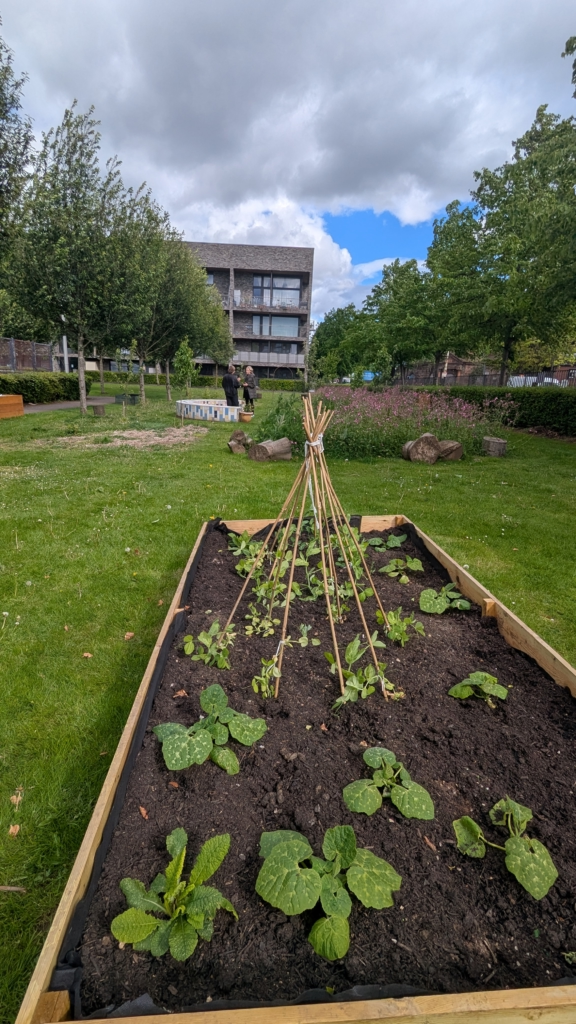
Like any project, we tracked outcomes and impacts. But one of the most important lessons for me personally is that numbers only tell part of the story.
What really captured the impact of Creative Climate Futures were the stories of individuals feeling heard, of communities coming together, of ideas taking root and growing into something bigger.
These stories revealed changes that are difficult to quantify. Shifts in confidence, relationships, and ways of thinking. They showed that climate action isn’t just about physical transformation, it’s about social and cultural change too.
Reflecting on the project, three key lessons stand out:
- Centre communities at every stage. Not as participants, but as partners with real influence.
- Use creativity as a catalyst. Artistic approaches can unlock conversations and possibilities that traditional methods can’t.
- Value lived experience alongside data. Stories and local knowledge are just as important as technical evidence.
These ideas aren’t new in theory, but seeing them in practice, and witnessing their impact, reinforces just how essential they are.
Creative Climate Futures officially finished at the end of March this year, marked by a final event where partners and communities came together to reflect on what we’d achieved, and crucially, what comes next. The project may have ended, but the work absolutely hasn’t.
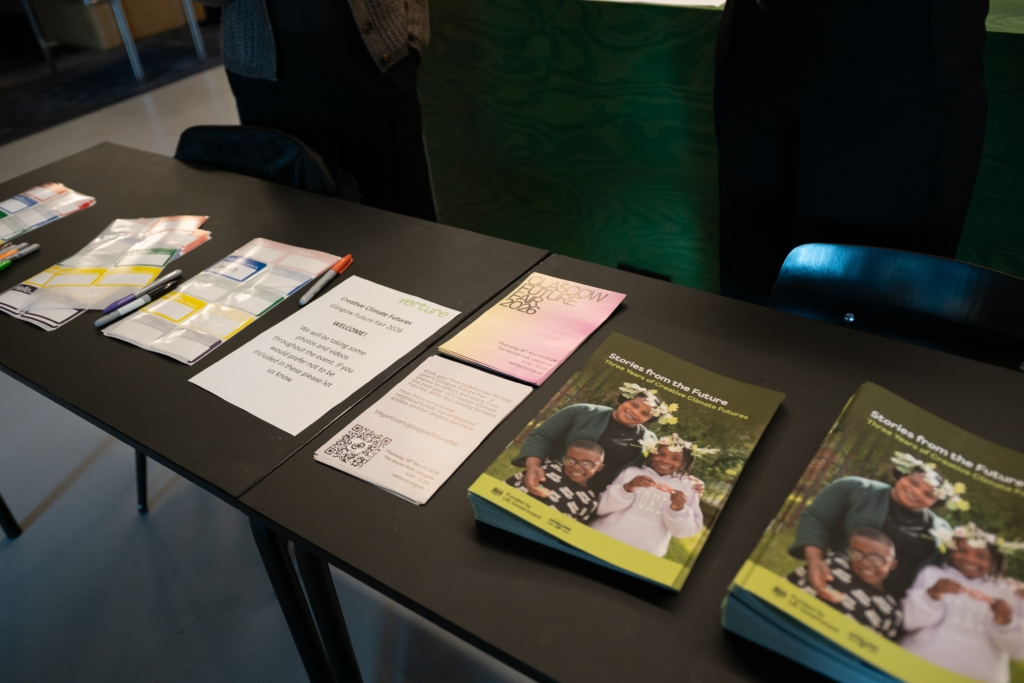
The question now is how we carry this learning forward. How do we apply this approach in other neighbourhoods? How do we embed co-creation and creativity into mainstream climate delivery? And how do we ensure communities continue to have a genuine voice in shaping the places they live?
These are not small questions, but Creative Climate Futures has shown that there is a way to approach them. At Verture, this work feeds directly into our broader focus on building just resilience, ensuring that the transition to a climate-ready future is fair, inclusive and grounded in local realities.
Working alongside so many committed partners has been a privilege. The ambition and imagination across the city gives me real confidence about what comes next. For me, the biggest takeaway is this: climate action isn’t something that happens to communities. It happens with them. Without that, it doesn’t happen at all.
