Story
How Nature Can Help to Build Climate Resilience Across Scotland
The challenge
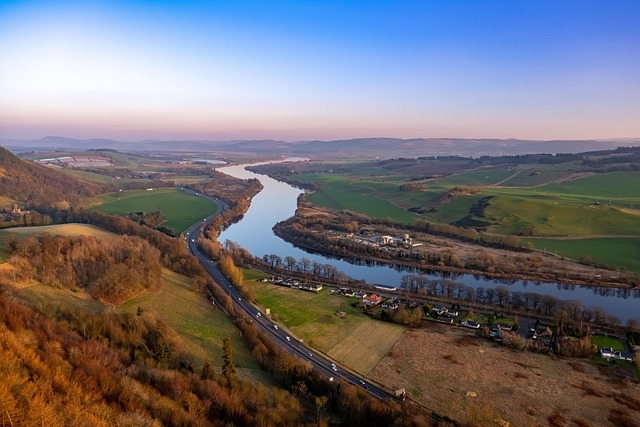
Climate change is already affecting Scotland’s rivers, landscapes and communities. Flooding, drought, rising temperatures and extreme weather are putting increasing pressure on people, nature and infrastructure.
Restoring nature at a river catchment scale can help communities adapt to these climate impacts while improving biodiversity, water quality and ecosystem health. The challenge is knowing where action can have the greatest impact.
The research
In 2025, working with the James Hutton Institute and funded by NatureScot, Verture helped deliver a national piece of research to identify where nature restoration could provide the greatest benefits for climate adaptation across Scotland. The project was called Prioritising Catchments for Nature Restoration in Scotland to Support Climate Change Adaptation. Other organisations such as Scottish Water, SEPA, and Scottish Forestry were also involved helping to provide the data needed for the research.
The project looked at river catchments that were at climate risks and combined mapping, data analysis, expert insight and stakeholder engagement to identify the catchments where investment in nature restoration could support both people and nature.
The findings
For NatureScot and the other organisations involved in the work, the GIS data they now have access to is helping to identify areas where they can pool resources to work together on nature restoration.
The research has also produced a national evidence base that can help guide future nature restoration efforts. The report is available for all to see and use the information as a guide for developing nature restoration projects. By bringing together climate adaptation, environmental data and local knowledge, the project provides a clearer picture of where restoration activities could deliver multiple benefits, including:
- Reducing flood risk
- Improving water management
- Supporting biodiversity
- Strengthening climate resilience
- Protecting natural assets that communities rely on
Why it matters
Tackling biodiversity loss is often the focus of discussions about nature restoration, but it is also one of Scotland’s most effective climate adaptation tools.
Healthy rivers, wetlands, woodlands and peatlands help communities become more resilient to climate impacts while creating wider social and environmental benefits. These include flood and heat mitigation, water quality improvements, carbon sequestration, improved amenity and recreation value, management of surface water and flash flooding, and increased access to quality green and blue spaces.
This work helps ensure future investment is directed towards the places where it can make the biggest difference and deliver the most co-benefits.
Looking ahead
The findings will help inform future discussions around catchment-scale nature restoration and wider adaptation planning across Scotland.
As climate impacts continue to grow, identifying where nature can provide the greatest resilience benefits will become increasingly important.