
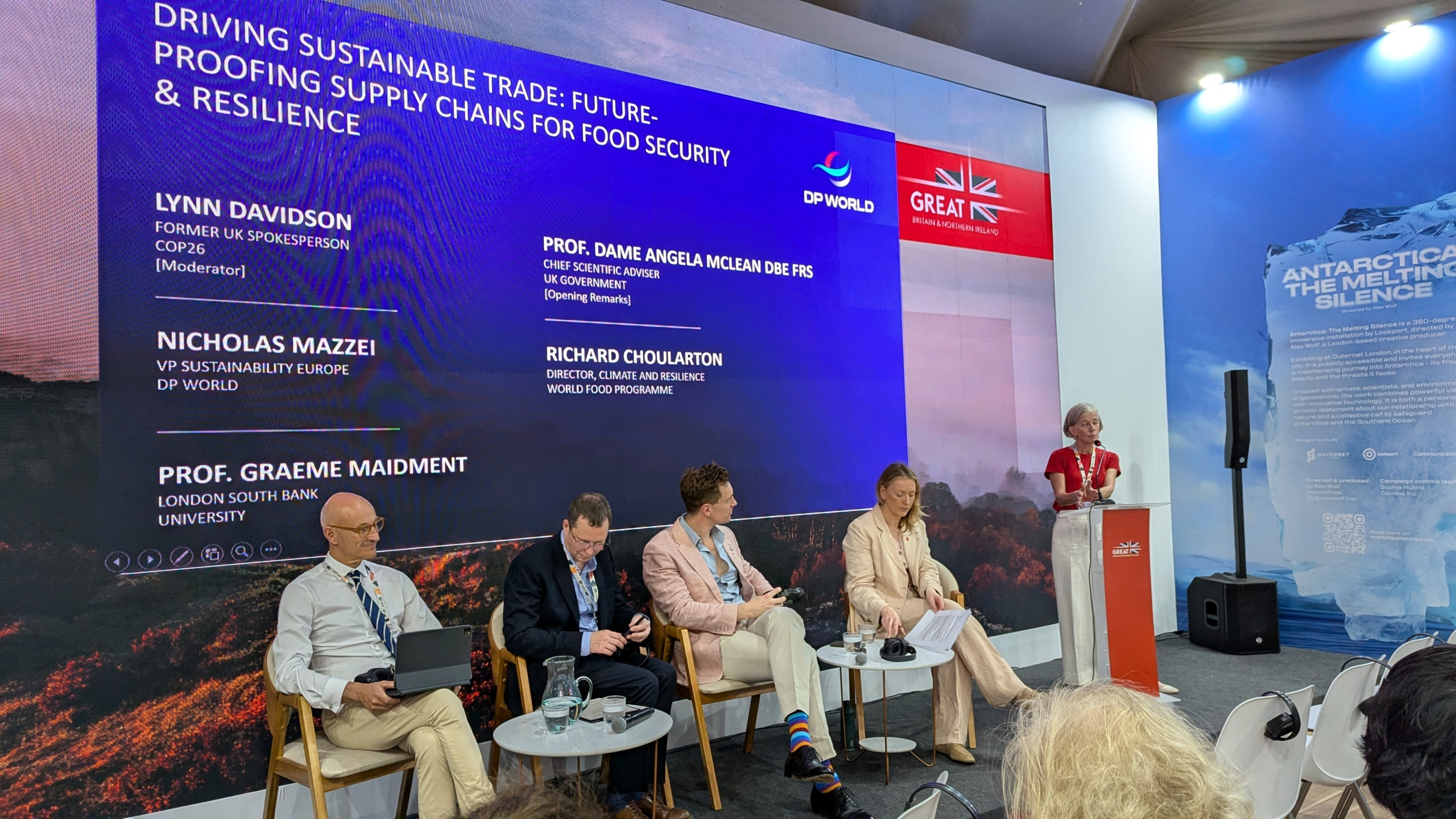
The UK Pavilion and supply chains
On Tuesday 10th, our second full day at COP30, we attended a panel session looking at supply chain resilience – not perhaps the most exciting subject on the face of it, but which one had some fascinating insights into work at a global scale.
Richard Choularton from the World Food Programme was looking at things on a global scale, and it was inspiring to hear. The WFP is moving from responding to climate disasters, to anticipating them. They use super-tankers to pre-position aid at sea, moving supplies around the globe based on weather forecasts to supply aid using predictive systems.
Professor Graeme Maidment from LSBU took hopeful lessons from the way that global markets dealt with the issue of CFCs. He argued that we should be getting better at using tech – with an incredible example around using cold stores as a form of thermal battery. There is also a huge cost of inaction – climate events might cause supermarkets to lose £100k in stock, but they would also lose an equivalent amount in lost goodwill from customers.
The upbeat narrative was echoed by Nicholas Mazzei from DP World, a global logistics company.* Petrol cars peaked in 2017 – the future is electric. China was often leading the way on this. Again, there were technical arguments, including another remarkable example of extracting humidity from the air to produce drinking water. Nick also noted polling from More in Common – the majority of the public support more climate action.
*DP World also sponsored this session. The lines were often blurred, throughout COP30, between private business, national governments, and activist pressure groups. “Reading the small print” around whoever was speaking, no matter how persuasive, became a necessity.
